


Your guide to hosting a poker night that's a straight-up win.
UPDATED October 17, 2025
Tired of the same old get-togethers? Get out from in front of the TV and in on the action. An at-home poker night is a more empowering way to spend time with your friends.
We’re breaking down the essentials for hosting your own No Limit Texas Hold’em tournament in the comfort of your home. Grab some good snacks and a few friends for some fun on the felt.
Your Home Game Toolkit
First things first, what do you need to get your game off the ground?
Friends: Four to nine.
Chips: A 500-chip set is recommended.
Table: One large enough for your group.
Cards: A standard deck with the jokers removed.
Dealer Button: Or any object to mark the dealer.
Your Game, Your Stakes
What are you playing for? Most tournaments play down to a single winner, but also award second- or third-place prizes. As a host, consider a small prize for the winner. Bragging rights are a great prize, too!
Playing by the Rules
The Blinds: Keeping the Game Moving
Blinds are the mandatory wagers placed into the pot before any cards are dealt. They are what keep the game alive!
To ensure the game moves at a good clip, blinds increase at regular intervals throughout the tournament. Below is an example of a blind structure for a tournament with seven people, set to last two and a half hours with 30-minute rounds. Each player would begin with 5,000 chips and the small and big blinds begin at 25/50.
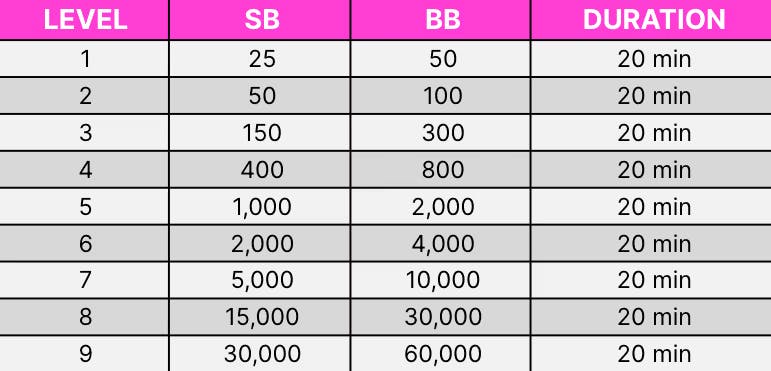
Pro Tip: Utilize a blinds structure calculator to create a custom blueprint that works for your group size, time constraints, and chip preferences.
Shuffle Up and Deal
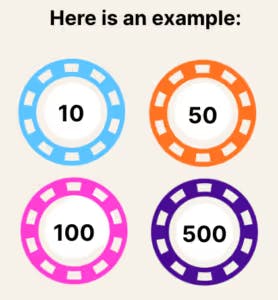
Ready to deal? This is your moment to shine. First, get to know your chips by identifying the denominations and clearly stating the corresponding values for each color. Designate someone to be responsible for blind levels by setting a timer for 30-minute intervals. Each time the timer goes off, announce that the blinds have gone up, and let the new round begin!
After the blinds are placed, the dealer deals each player two cards face down. These are called your hole cards, and only you get to see them. Once the first round of betting is complete, the dealer places five community cards in the center of the table. Here's a breakdown of the dealing process and the cards you'll see:
The Flop: The first three community cards dealt face up.
The Turn: The fourth community card dealt face up.
The River: The fifth and final community card dealt face up.
Showdown: Once the final betting round closes, remaining players reveal their hole cards to determine the winner!
The Burn Card: A Ritual of Trust
When we play online, we often don’t notice the use of the burn card. A burn card is dealt off the top of the deck between each street (the flop, turn, and river) and discarded face down.
The purpose is to remove any potential for cheating, as it ensures that the next card in play could not have been identified or marked by a player. Once the preflop action closes and you are ready for the flop, the dealer should burn a card and then deal the flop face up. This is done again before the turn and again before the river. There should be a total of three burn cards every time a hand makes it to the river.
The Muck, Plus: New Rules for a Winning Night
Now that you have the basic rules, here are a few more to help you run the table like a boss.
Protect Your Hand: This is a golden rule. Teach players to always place a chip on top of their cards after they've looked at them. This simple action prevents their hand from being accidentally exposed or "mucked" (discarded) by the dealer.
Keep a Clean Stack: Encourage players to stack their chips neatly in uniform piles (e.g., in stacks of 20). This makes it easy for everyone to see how many chips a player has and keeps the game moving at a good clip.
Speak Your Play: Always verbally state your action—"call," "raise," or "fold"—before putting any chips into the pot. This prevents miscommunication and keeps the game moving at a good pace.
The Action Clock: Always act in turn. New players often act out of order, which can disrupt the flow and give away information. Remember to wait for the action to reach you, but take as long as you need to make your move.
No Table Talk (During the Hand): Explain the etiquette of not discussing the hand's possibilities with other players while it's in progress. This ensures the game's integrity and prevents anyone from getting unwanted advice.
The Final Hand: Unleash Your Power
Another reason to shuffle up and deal out? Playing poker recreationally is a power tool for sharpening your mental game. We know learning this mind sport can be a bit intimidating, but the benefits are vast and can translate to everyday life skills.
We’re on a mission to empower one million people by teaching them how to play poker, and we would love to bring you and your friends along for the ride.